

Don't Freeze Your Range
- Patrick Simms
- Jan 3
- 3 min read

Essential Winter E-Bike Maintenance Tips for Youngstown Riders
Living in Northeast Ohio, we know winter weather is unpredictable. One day it’s 50 degrees and sunny on the Kirk Road Bikeway, and the next we’re buried in snow and slush.
Whether you’re a die-hard, all-season commuter or you’ve tucked your e-bike away until spring, winter requires special attention. Electric bikes are an investment, and freezing temperatures combined with road salt can quietly shorten their lifespan if you aren’t careful.
Here are five essential tips to keep your e-bike running smoothly through the colder months:
1. The Golden Rule: Respect the Battery
The lithium-ion battery is the heart of your e-bike—and it’s also the component most sensitive to cold weather. You may notice your range drops by 20–30% on freezing days. That’s normal. What matters most is how you charge and store your battery.
The “Thaw Before Charge” Rule:
This is critical. Never charge a battery that is freezing cold. If you’ve been riding in temperatures below 32°F, bring the battery inside and let it warm up to room temperature for at least two hours before plugging it in. Charging a frozen battery can permanently damage the cells—and replacement batteries are expensive.


Pro Tip! Store It Warm:
Even if your bike frame lives in a garage or shed, always remove the battery and store it indoors at room temperature.
2. Fight the Rust Belt Salt
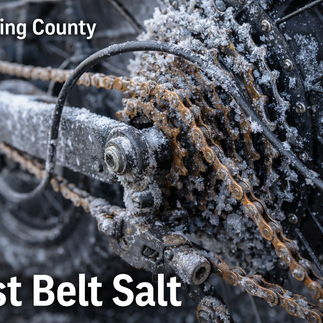
In Mahoning County, we love our road salt. Unfortunately, your bike’s drivetrain does not. Salt is highly corrosive and accelerates rust on chains, cassettes, and electrical components.
Wipe Down After Rides:
Skip the hose—especially near the motor. Instead, use a damp cloth to wipe salty spray off the frame and battery housing, then dry everything with a towel.

Pro Tip! Check the Contacts:
Occasionally inspect the metal contact points where the battery slides into the frame. Keeping them clean and dry ensures a solid, reliable power connection.
3. Switch Your Chain Lube
During summer riding season, many cyclists use dry lube because it doesn’t attract dust. In winter conditions, that won’t cut it.
Switch to a wet lube. It’s thicker, water-resistant, and designed to stay on your chain when riding through puddles, slush, and melting snow. If you notice your chain starting to turn orange, clean it and re-lube it immediately.


4. Traction Control: Tires Matter
Whether you’re riding a Heybike or a Velotric, your tires are your only connection to the road. Cold asphalt offers less grip than warm pavement—even when there’s no ice.
Lower the Pressure (Slightly):
Reducing tire pressure a bit—while staying within the manufacturer’s recommended range—allows more rubber to contact the road, improving traction.


Pro Tip! Watch the Tread:
If your tires are worn or balding, winter roads are not the time to push your luck.
5. Storing for the Season? Do It Right.
If you’ve decided to hang up the helmet until the flowers bloom at Mill Creek Park, don’t just park the bike and forget about it. But don't forget to visit the park in the winter, there's so much to explore by foot or in the car!


Pro Tip! The 50% Rule:
Avoid storing your battery fully charged or completely drained. The ideal storage level is 50–60%.
Monthly Check-In:
Batteries slowly self-discharge over time. Check your battery once a month and top it back up to that 50% range if needed. This helps ensure it’s healthy and ready when riding season returns.
Ready for Spring Riding?
Don’t wait until the first warm Saturday to check your gear. If you have questions about battery health, winter maintenance, Spring tune-ups, or you’re thinking about upgrading for the upcoming season, we’re always happy to help, shoot us a text at 330-406-9682.


Comments